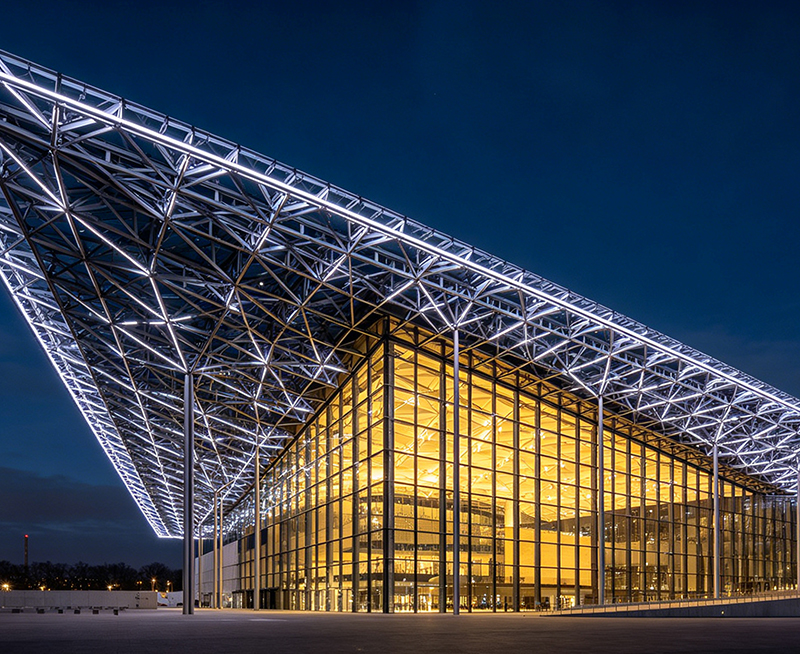
Large-span Steel Structure Museum

Large-span Steel Structure Museum

As a professional exporter of custom steel structure buildings, we are committed to providing high-quality, customizable large-span steel structure museum solutions that meet international standards. Our products are widely used in global cultural and museum construction projects, covering large and medium-sized comprehensive museums, thematic museums, cultural heritage museums, industrial heritage museums and art museums, with reliable quality, flexible customization and perfect after-sales service. The following is a detailed introduction to our large-span steel structure museum, including definition, characteristics, advantages, specifications, customization content and scope, to help you fully understand our products and meet your global cultural and museum construction needs.

What is a Large-span Steel Structure Museum?

A large-span steel structure museum is a professional cultural and heritage protection building that uses high-strength steel as the main load-bearing structure, with a span of more than 30 meters (the steel structure standard defines a span of more than 60 meters as a large-span structure). It integrates advanced steel structure design, modular prefabrication, intelligent construction and cultural heritage protection technology, and the main components such as roof grid, steel frame, support column and curtain wall are prefabricated in the factory, then transported to the construction site for hoisting and assembly. As a core carrier of cultural heritage protection, collection display and cultural dissemination, it undertakes the functions of cultural relics collection, display, research, education and cultural exchange, and can accommodate a large number of cultural relics display and visitors. With the characteristics of large space, light weight, high strength, beautiful appearance, excellent environmental protection performance and good cultural integration, it has become the mainstream choice of modern museum construction around the world, and is an important symbol of a city's cultural heritage protection level and urban cultural taste. Our large-span steel structure museums fully comply with international standards such as CE, ASTM, ISO, and can be customized according to the cultural positioning, cultural relics protection needs and local building codes of different countries and regions, integrating cultural connotation with modern construction technology seamlessly 

Product Characteristics


Super Large Span & Flexible Exhibition Space

•The span can reach 30-250 meters, and the roof adopts spatial structure forms such as grid structure, truss structure and cable dome structure, which can realize a large-area column-free space [7][8]. It can flexibly layout exhibition halls, cultural relics storage rooms, academic research rooms, public service areas and other functional areas, avoid sight blocking caused by supporting columns, and meet the display needs of large-scale cultural relics, large-scale exhibitions and special-shaped exhibition layouts. The large-span space can also realize multi-layer and multi-functional space division, such as the spiral ramp design in the museum, which not only enriches the spatial sense, but also provides a smooth visiting flow .

Light Weight & High Structural Strength

• The main structure is made of high-quality high-strength steel (Q355B, ASTM A36, etc.), which has excellent tensile and compressive strength [5]. The weight of the steel structure is only 1/3-1/5 of that of the traditional reinforced concrete structure, which can effectively reduce the load of the foundation project, save the cost of foundation construction, and adapt to the complex geological conditions of the museum construction site (such as coastal areas, plateau areas and earthquake-prone areas). At the same time, it has strong wind resistance, seismic resistance and snow load resistance, and the steel structure has good rigidity, which can effectively avoid structural deformation, ensure the stability of the museum during long-term use, and provide a safe storage and display environment for cultural relics.

Flexible and Beautiful Appearance & Cultural Integration

The steel structure has strong plasticity, and can be designed into various shapes such as curved surface, streamline and special shape according to the urban cultural characteristics, cultural heritage connotation and architectural aesthetics . For example, the shape imitating cultural relics (Jade Pig Dragon), the shape of a sailing ship, or the shape integrating regional cultural symbols, which can not only meet the functional needs, but also become a landmark cultural building of the city, integrating regional cultural connotation into the architectural design, showing the unique cultural charm of the region . The roof can be equipped with light-transmitting membrane materials or glass curtain walls to achieve good lighting effects, create a bright and comfortable visiting environment, and at the same time reduce energy consumption, realizing the perfect integration of architecture, culture and art.

Excellent Environmental Protection & Cultural Relic Protection Performance

The steel structure has good thermal insulation, sound insulation and moisture-proof performance. Through scientific structural design and matching of environmental protection materials, it can effectively control the indoor temperature, humidity and air quality, meet the strict environmental requirements of cultural relics storage (constant temperature and humidity), and avoid cultural relics damage caused by environmental changes . The steel materials can be 100% recycled and reused, which conforms to the global low-carbon and environmental protection development trend. No a large amount of construction waste is generated during the construction process, which reduces environmental pollution and realizes green and sustainable construction.

High Prefabrication Degree & Efficient Construction

The main components (steel grid, steel columns, curtain walls, etc.) are prefabricated in the factory with standardized production, which ensures the precision and quality of the components [2][8]. The on-site construction only needs hoisting and assembly, and advanced technologies such as BIM digital pre-assembly, segmented hoisting and hydraulic synchronous lifting are adopted to greatly reduce on-site wet work, shorten the construction period, and the construction efficiency is 50%-70% higher than that of traditional concrete museums. It can realize rapid delivery and put into use earlier, reducing the impact on the surrounding cultural environment and cultural relics protection work.

Intelligent & Multi-functional Integration

It can be integrated with intelligent cultural relics protection systems, such as constant temperature and humidity control system, intelligent monitoring system, anti-theft alarm system and digital display system, to improve the level of cultural relics protection and the visiting experience of visitors . The internal space can be flexibly divided, which can not only meet the basic functions of cultural relics storage, display and research, but also set up public service areas, academic exchange halls, cultural and creative areas, digital experience areas and other supporting spaces to realize multi-functional integration and improve the comprehensive utilization rate of the space.

Product Advantages

Our Customization Content & Scope

We focus on providing one-stop customization services for large-span steel structure museums, covering the entire process from design, production, transportation to installation, and comprehensively meeting the personalized needs of global customers. Combining with international standards, cultural relics protection norms and local building codes of various countries, we provide professional customization solutions to ensure that the products are compliant, practical, beautiful and energy-saving, and meet the functional needs of different types of cultural relics protection, display and cultural dissemination.

01

Structural Design Customization

According to the customer's needs, museum scale, cultural relics display needs and regional conditions, customize the span, height, building area, roof structure form (grid, truss, cable dome, inclined grid, etc.) [7][8]. Combine the local climate, geological conditions and seismic standards to optimize the structural design, carry out mechanical simulation, deflection calculation and environmental simulation, ensure the structural stability, safety and excellent environmental control effect, and provide professional 3D design drawings, renderings and structural calculation reports for customer confirmation. The steel consumption can be optimized and new materials such as carbon fiber cables and steel box girders can be applied to reduce the project cost and meet the special structural needs (such as spiral ramp).

02

Appearance & Interior Customization

Customize the appearance shape (curved surface, streamline, special shape, etc.), exterior decoration materials (color steel plate, aluminum alloy plate, glass curtain wall, stone, etc.) and color according to the customer's aesthetic needs, urban cultural characteristics, cultural heritage connotation and museum positioning . Customize the interior layout, including exhibition halls, cultural relics storage rooms, academic research rooms, public service areas, etc., to meet the functional needs of cultural relics display and visitor visiting, and improve the visiting experience. The roof can be customized with light-transmitting membrane materials or glass curtain walls to improve lighting effects and reduce energy consumption. The interior decoration can be matched with acoustic and environmental protection materials to achieve the best cultural relics protection environment and visiting experience .

03

Material Customization

According to the customer's budget, use environment and local standards, select appropriate steel materials (Q235B, Q355B, ASTM A36, etc.), thermal insulation materials, sound insulation materials, decoration materials and new materials (carbon fiber cables, steel box girders) [5][8]. All materials meet international environmental protection and quality standards, and can be customized according to the anti-corrosion, anti-freezing and other requirements of different regions (such as coastal anti-corrosion treatment, plateau anti-freezing design). The materials for cultural relics protection areas can be customized to meet the strict environmental requirements of cultural relics storage (constant temperature and humidity, anti-corrosion, moisture-proof) .

04

Supporting Facilities Customization

Customize supporting facilities according to the customer's use needs and museum type, including cultural relics storage room (constant temperature and humidity), digital display system, intelligent monitoring system, anti-theft alarm system, academic exchange hall, public service area, cultural and creative area, digital experience area, VIP reception room, fire protection system, emergency evacuation system, etc.  It can also be integrated with intelligent operation and maintenance systems and digital twin systems to realize intelligent operation and management of the museum, such as intelligent environmental control, cultural relics monitoring and security management, improving operation efficiency and the level of cultural relics protection.

05

Museum Type Customization

Customize according to the museum type (comprehensive museum, thematic museum, cultural heritage museum, industrial heritage museum, art museum, etc.), and design corresponding span, area, exhibition space and supporting facilities to meet the functional needs of different types of cultural relics protection and display. It can be designed for large-scale comprehensive museums with a large number of cultural relics and visitors, as well as small and medium-sized thematic museums and industrial heritage museums.

06

Regional Adaptation Customization

According to the climate and geological conditions of the customer's location, carry out targeted customization, such as anti-corrosion treatment for coastal areas (preventing sea salt erosion and typhoon damage), anti-freezing design for plateau areas, and seismic reinforcement design for earthquake-prone areas . Optimize the building shape, ventilation system and thermal insulation design according to the local climate characteristics to ensure that the museum can adapt to the local natural environment and meet the local building codes and cultural relics protection norms.

07

Export & Installation Customization

Provide global export transportation services, including container packaging, customs declaration, shipping, etc., to ensure that the components are safely transported to the customer's designated location (adapt to sea transportation, land transportation and other modes). Provide on-site installation guidance services, send professional engineers to the site to guide hoisting and assembly, adopt BIM digital pre-assembly, inclined grid lifting and segmented hoisting technologies to ensure the construction quality and construction safety , and provide technical training for the customer's staff. Provide long-term after-sales maintenance services and technical support to solve the worries of customers in the later stage.

08

Standard Compliance Customization

According to the import standards, cultural relics protection norms and building codes of the customer's country, customize the product design and production, ensure that the product meets the local CE, ASTM, ISO and other certification requirements, and provide relevant certification documents to ensure smooth customs clearance and avoid quality inspection risks. The deflection limit, load-bearing capacity, environmental control indicators and other parameters fully comply with the local design specifications and cultural relics protection norms.

Specifications & Parameters

Parameter Category

English Specifications

Structural Material

High-strength steel (Q235B, Q355B, ASTM A36, etc.), steel plate thickness 6-20mm; steel pipe diameter 100-600mm; optional carbon fiber cable for roof structure; steel box girder can be used for special structures (such as spiral ramp)

Span Range

30-250 meters (customizable according to needs), the maximum span can reach 250 meters (grid/cable dome structure); the maximum span of inclined grid roof can reach 38 meters

Building Area

1000-120000 ㎡ (customizable according to museum scale and cultural relics display needs), the maximum single museum area can reach 126000 ㎡

Visitor Capacity

500-10000 person-times per day; the number of exhibition halls can be customized (5-30), and the exhibition area can reach 1000-24000 ㎡

Seismic Grade

Grade 8-9, in line with international seismic standards; deflection limit ≤L/250 (L is the plate span); the maximum vertical deformation of spiral ramp is ≤135mm

Wind Resistance Grade

Grade 10-12, can resist strong winds of 25-32.6m/s; wind load: 0.6-1.2kN/㎡ (according to 50-year return period); typhoon resistance design for coastal areas

Fire Rating

Grade A1 (non-combustible), fireproof coating, fire resistance limit ≥2.5 hours; equipped with intelligent fire detection, fire-fighting robot and fire-fighting sprinkler system

Service Life

50-100 years (depending on material quality and later maintenance); the design service life of key cultural relics protection areas can reach 100 years

Construction Cycle

Factory prefabrication: 30-60 days; on-site hoisting and assembly: 45-150 days (depending on span and area); BIM digital pre-assembly and inclined grid lifting technology are adopted to improve construction efficiency

Roof Structure

Grid structure, truss structure, cable dome structure, membrane structure (optional); light-transmitting membrane or glass curtain wall can be selected; inclined grid structure can be adopted for sloping roof; carbon fiber cable tension structure is optional

Environmental Control Indicators

Constant temperature: 18-22℃ (adjustable); constant humidity: 45%-60% (adjustable); sound insulation effect ≥45dB; air purification level: Grade 1; effectively ensure the safety of cultural relics storage

Supporting Facilities

Cultural relics storage room (constant temperature and humidity), digital display system, intelligent monitoring system, anti-theft alarm system, academic exchange hall, public service area, cultural and creative area, digital experience area, VIP reception room, fire protection system, emergency evacuation system (customizable according to museum needs)

INTERESTED IN SIMILAR PROJECTS?

We are able to flexibly respond to various challenges ranging from standard factories to complex landmark buildings, providing you with truly tailored solutions.

Get A Free Quote

  • Afghanistan
  • Albania
  • Algeria
  • American Samoa
  • Andorra
  • Angola
  • Anguilla
  • Antarctica
  • Antigua and Barbuda
  • Argentina
  • Armenia
  • Aruba
  • Australia
  • Austria
  • Azerbaijan
  • Bahamas
  • Bahrain
  • Bangladesh
  • Barbados
  • Belarus
  • Belgium
  • Belize
  • Benin
  • Bermuda
  • BBhutan
  • Bolivia
  • Bosnia and Herzegovina
  • Botswana
  • Bouvet Island
  • Brazil
  • British Indian Ocean Territory
  • Brunei Darussalam
  • Bulgaria
  • Burkina Faso
  • Burundi
  • Cambodia
  • Cameroon
  • Canada
  • Cape Verde
  • Cayman Islands
  • Central African Republic
  • Chad
  • Chile
  • China
  • Christmas Island
  • Cocos (Keeling) Islands
  • Colombia
  • Comoros
  • Congo
  • Cook Islands
  • Costa Rica
  • Cote D'Ivoire
  • Croatia
  • Cuba
  • Cyprus
  • Czech Republic
  • Denmark
  • Djibouti
  • Dominica
  • East Timor
  • Ecuador
  • Egypt
  • El Salvador
  • Equatorial Guinea
  • Eritrea
  • Estonia
  • Ethiopia
  • Falkland Islands (Malvinas)
  • Faroe Islands
  • Fiji
  • Finland
  • France, Metropolitan
  • French Guiana
  • French Polynesia
  • Gabon
  • Gambia
  • Georgia
  • Germany
  • Ghana
  • Gibraltar
  • Greece
  • Greenland
  • Grenada
  • Guadeloupe
  • Guam
  • Guatemala
  • Guinea
  • Guinea-Bissau
  • Guyana
  • Haiti
  • Honduras
  • Hong Kong, China
  • Hungary
  • Iceland
  • India
  • Indonesia
  • Iran (Islamic Republic of)
  • Iraq
  • Ireland
  • Israel
  • Italy
  • Jamaica
  • Japan
  • Jordan
  • Kazakhstan
  • Kenya
  • Kiribati
  • North Korea
  • South Korea
  • Kuwait
  • Kyrgyzstan
  • Lao People's Democratic Republic
  • Latvia
  • Lebanon
  • Lesotho
  • Liberia
  • Libyan Arab Jamahiriya
  • Liechtenstein
  • Lithuania
  • Luxembourg
  • Macau
  • Madagascar
  • Malawi
  • Malaysia
  • Maldives
  • Mali
  • Malta
  • Marshall Islands
  • Martinique
  • Mauritania
  • Mauritius
  • Mayotte
  • Mexico
  • Micronesia
  • Moldova
  • Monaco
  • Mongolia
  • Montserrat
  • Morocco
  • Mozambique
  • Myanmar
  • Namibia
  • Nauru
  • Nepal
  • Netherlands
  • New Caledonia
  • New Zealand
  • Nicaragua
  • Niger
  • Nigeria
  • Niue
  • Norfolk Island
  • Northern Mariana Islands
  • Norway
  • Oman
  • Pakistan
  • Palau
  • Panama
  • Papua New Guinea
  • Paraguay
  • Peru
  • Philippines
  • Pitcairn
  • Poland
  • Portugal
  • Puerto Rico
  • Qatar
  • Reunion
  • Romania
  • Russian Federation
  • Rwanda
  • Saint Kitts and Nevis
  • Saint Lucia
  • Saint Vincent and the Grenadines
  • Samoa
  • San Marino
  • Saudi Arabia
  • Senegal
  • Seychelles
  • Sierra Leone
  • Singapore
  • Slovak Republic
  • Slovenia
  • Solomon Islands
  • Somalia
  • South Africa
  • Spain
  • Sri Lanka
  • St. Helena
  • Sudan
  • Suriname
  • Swaziland
  • Sweden
  • Switzerland
  • Syrian Arab Republic
  • Taiwan, China
  • Tajikistan
  • Tanzania
  • Thailand
  • Togo
  • Tokelau
  • Tonga
  • Trinidad and Tobago
  • Tunisia
  • Turkey
  • Turkmenistan
  • Turks and Caicos Islands
  • Tuvalu
  • Uganda
  • Ukraine
  • United Arab Emirates
  • United Kingdom
  • United States
  • Uruguay
  • Uzbekistan
  • Vanuatu
  • Vatican City State (Holy See)
  • Venezuela
  • Viet Nam
  • Virgin Islands (U.S.)
  • Wallis and Futuna Islands
  • Western Sahara
  • Yemen
  • Zambia
  • Zimbabwe
  • Montenegro
  • Serbia
  • Palestine
  • South Sudan
  • Jersey

Upload Attachment

Related Products